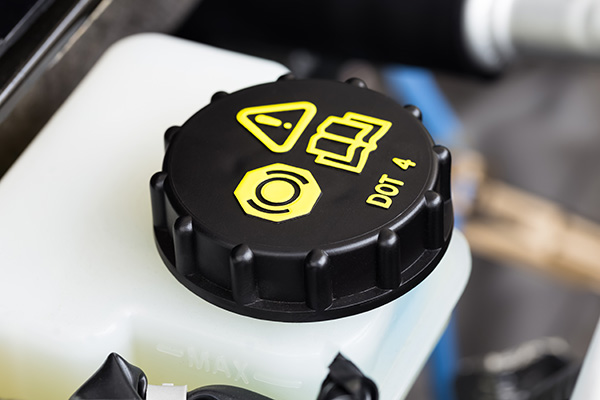
When you press down on your car's brake pedal, you expect an immediate, firm response that brings your vehicle to a smooth and safe stop. It feels like a simple mechanical reaction, but beneath the floorboards, a highly sophisticated hydraulic system is doing some incredibly heavy lifting. At the center of that system is your brake fluid, a specialized liquid designed to transfer the pressure from your foot directly to the brake pads at your wheels.
During a routine service at our shop, we often recommend a brake fluid flush based on the age of the fluid or its moisture content. This sometimes catches customers off guard. They ask us how moisture could possibly get inside a completely sealed braking system. It is a fantastic question. The answer comes down to a fascinating bit of chemistry that turns your brake fluid into a magnet for water, and understanding this process is vital for your safety on the road.
The Science of a Hygroscopic Fluid
Most standard automotive brake fluids, specifically those rated as DOT 3, DOT 4, and DOT 5.1, are glycol-ether based liquids. These fluids possess a unique chemical property known as being hygroscopic. This is a fancy scientific term which simply means the fluid actively attracts and absorbs moisture directly from the surrounding air.
At first glance, this sounds like a massive design flaw. Why would automotive engineers choose a fluid that deliberately pulls water into your braking system? They actually did it on purpose for your protection.
Preventing Water Pockets: Water will inevitably find a way into your vehicle over time. If brake fluid did not absorb this moisture, the water would pool in the lowest points of the braking system, typically inside your steel brake lines or caliper pistons.
Avoiding Localized Boiling: Pockets of pure water would boil at just two hundred and twelve degrees, turning into pockets of highly compressible steam that could cause your brakes to completely fail during sudden hard stopping.
Controlling Internal Corrosion: By absorbing the water and trapping it in a chemical bond, the fluid prevents raw water from sitting against internal metal components and causing instant, catastrophic rust.
How Moisture Sneaks into a Sealed System
If the braking system is closed off to the elements, you might wonder where this moisture is coming from in the first place. The truth is that no automotive system is entirely microscopic-impermeable.
Every single time you press the brake pedal, the fluid level inside your clear plastic reservoir drops slightly as the calipers extend. When you release the pedal, the fluid rushes back up. This constant movement forces the reservoir to breathe. Microscopic amounts of humid air are pulled in through the tiny vent holes in the reservoir cap.
Over months and years of driving through humid summer days and rainy spring mornings, the moisture in that air migrates straight into the fluid. Furthermore, brake hoses are made of specialized rubber blends that can slowly allow water vapor to permeate through the microscopic pores of the hose walls over time.
The Hidden Dangers of Contaminated Fluid
While your brake fluid is designed to absorb water, it has a strict limit. Once the moisture content inside your system crosses the three percent mark, the fluid is considered completely spent and dangerous.
The biggest issue with moisture contamination is the dramatic drop in your fluid's boiling point. High-quality, fresh brake fluid can withstand temperatures up to four hundred or five hundred degrees without boiling. This high threshold is necessary because the friction of your brake pads pressing against the rotors generates intense, blistering heat.
If your fluid is saturated with water, its boiling point drops significantly. During heavy braking, such as driving down a steep mountain pass or navigating stop-and-go highway traffic, the fluid can actually begin to boil inside the lines. This creates gas bubbles. Unlike liquid, gas compresses easily under pressure. When you step on the pedal, you will experience a terrifying, spongy pedal feel where the pedal sinks all the way to the floorboards without actually stopping the vehicle.
Because brake fluid absorbs moisture quietly over time, you will not usually see a leak on your driveway or hear a strange noise alerting you to the problem. The degradation happens slowly, meaning your stopping distance increases so gradually that your brain adjusts to the change without you realizing your safety is compromised.
Our team of certified technicians does not believe in guessing when it comes to your brakes. We use specialized electronic testers to measure the exact moisture percentage and boiling point of your fluid. If it is time for a refresh, we will perform a flawless hydraulic flush, purging every drop of old, contaminated fluid and replacing it with premium, moisture-free fluid tailored to your manufacturer's precise specifications.
Keep Your Braking System Fresh and Dry
Do not risk your safety on an aging, water-logged braking system. We welcome you to European Auto Motors in Doral, FL, this week or give us a call to schedule a professional brake fluid inspection.
We look forward to helping you maintain maximum stopping power and absolute peace of mind on every single drive.