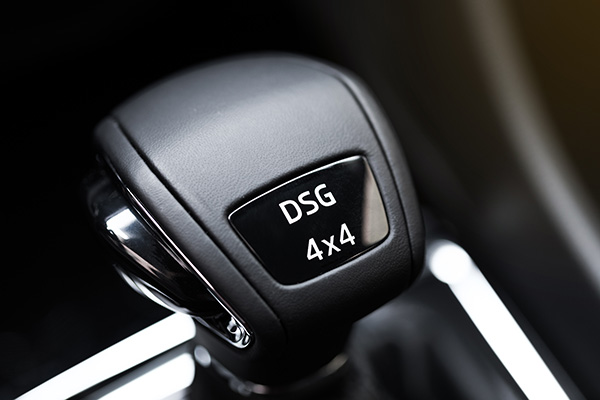
A DSG transmission has its own feel. Shifts are quick, power delivery is direct, and low-speed operation can feel different from a conventional automatic. If you drive the same Audi or Volkswagen every day, you also get familiar with what is normal for your car.
That is why small changes deserve attention. A hesitation that wasn't there before, a new shudder when leaving a stop, or a shift that suddenly feels too firm can tell us the transmission needs service or further testing. The goal is to catch the change early and figure out whether you are dealing with overdue maintenance, a clutch problem, or an issue with the DSG control system.
1. Drive or Reverse Takes Longer to Engage
When you move the shifter into Drive or Reverse, the transmission should engage without an excessive delay. DSG operation can feel slightly different from a traditional automatic, especially during low-speed maneuvering, but a new pause is something we want to know about.
You may notice the delay more after the car has warmed up or when switching quickly between Reverse and Drive in a parking lot. Fluid condition, clutch operation, adaptations, and the mechatronic system can all affect engagement. At our shop, we check whether the delay is consistent and what the transmission data shows when the gear is commanded.
2. The Car Shudders When Pulling Away
DSG transmissions use clutches to transfer engine power. When those clutches are engaging properly, the car should pull away without repeated shaking or vibration.
A developing problem can feel like:
- Shuddering as you leave a stop
- Vibration during light acceleration
- Jerking while backing up
- A grabbing sensation in slow traffic
- Uneven engagement on a hill
Those symptoms can point to clutch wear or control issues, but they don't prove the DSG itself is failing. Engine mounts, ignition problems, and other driveline components can create similar sensations. We try to reproduce the exact complaint before deciding where the vibration begins.
3. Shifts Become Harsh or Inconsistent
A DSG is designed to shift quickly, but the shifts should still feel controlled. If the car begins banging into gear, hesitating before a shift, or changing gears differently from one trip to the next, something has changed.
Temperature can give us another clue. Some problems appear only during the first few minutes of driving, while others become worse once the transmission reaches normal operating temperature. During an inspection, we look at fluid condition, stored faults, clutch data, adaptation values, and mechatronic operation rather than assuming fresh fluid will fix every harsh shift.
4. Engine RPM Rises Without the Car Accelerating Normally
If you press the accelerator and engine speed rises faster than vehicle speed, the transmission may not be transferring power as firmly as it should. The feeling can be similar to clutch slip in a manual-transmission car.
We pay attention to which gear the car is in and how much throttle is required before the symptom appears. A DSG clutch that is beginning to wear might behave well during gentle driving but slip more noticeably under heavier acceleration. Control problems can create similar behavior, so scan data and a road test are important before recommending clutch work.
5. A Transmission Warning Appears
A DSG fault doesn't always start with a major drivability problem. Sometimes the first clue is a transmission message, a flashing gear display, a check engine light, or a warning that certain gears are unavailable.
Fault codes can point us in several directions:
- Clutch adaptation or actuator problems
- Hydraulic pressure faults
- Transmission temperature problems
- Internal sensor faults
- Mechatronic electrical problems
- Communication or power supply issues
The code gives us a starting point, not an automatic parts order. Before condemning an expensive control unit, we check whether the DSG has proper voltage, good grounds, and reliable wiring connections.
DSG Service Is Not the Same on Every Audi or Volkswagen
Audi and Volkswagen have used several DSG designs, and their maintenance requirements are not identical. Some use wet clutches that operate with specialized transmission fluid, while others use different clutch and lubrication arrangements. Fluid type, filter requirements, service intervals, and procedures depend on the exact transmission.
That makes the vehicle's correct service schedule important. Regular maintenance with the specified fluid helps protect the gears, bearings, hydraulic components, and clutch system where applicable. Using the wrong fluid or treating every DSG as if it has the same service requirements can create problems instead of preventing them.
Service also has limits. If the transmission is already slipping badly, shuddering because of worn clutches, or setting internal mechatronic faults, changing the fluid will not repair worn hardware. We first determine whether the car needs scheduled service or diagnosis of an existing fault.
Get DSG Transmission Service In Doral, FL, With European Auto Motors
If your Audi or Volkswagen has started hesitating, shuddering, shifting harshly, or showing transmission warnings, European Auto Motors in Doral, FL, can check the DSG system and determine what it actually needs.
Schedule your DSG service or diagnostic visit before the change in transmission behavior becomes harder to ignore.